WIN A MEDIFY AIR PURIFIER COLLECTION ($1,300+ VALUE)!
ARE YOU READY TO WIN?
The Hidden Financial Impact of Indoor Air Quality: Why Medical-Grade Purification is a Smart Home Investment
In the modern era of energy-efficient construction and tightly sealed homes, Indoor Air Quality (IAQ) has emerged as a critical factor not only for personal health but for long-term financial stability. While often overlooked, the air we breathe indoors—where we spend approximately 90% of our time—can be up to five times more polluted than outdoor air.
Investing in medical-grade air purification is no longer a luxury reserved for hospitals; it is a strategic asset for the prudent homeowner. By mitigating the risks associated with “Sick Building Syndrome” and chronic respiratory issues, high-performance air cleaners provide a tangible Return on Investment (ROI).
1. The Economic Cost of Poor Indoor Air Quality
The financial burden of poor IAQ is staggered and often goes unnoticed until it culminates in significant expenditure. According to the Environmental Protection Agency (EPA), poor indoor air quality is ranked among the top five environmental risks to public health. For the average family, this translates directly to healthcare costs. Chronic exposure to particulate matter (PM2.5) and biological contaminants is directly linked to the rise of asthma and allergies.
Financially, the cost of asthma medication, specialist visits, and emergency room trips can amount to thousands of dollars annually per affected individual. Furthermore, the indirect costs associated with lost productivity—sick days taken by parents or days off school for children—compound these losses.
Beyond health, airborne contaminants wreak havoc on home infrastructure. Dust, dander, and debris clog HVAC filters and coat evaporator coils, reducing system efficiency by as much as 15%. This inefficiency leads to higher monthly utility bills and shortens the lifespan of expensive heating and cooling units.
2. HEPA H13/H14 Technology: The Gold Standard
Not all air purifiers are created equal, and understanding the technical specifications is vital for maximizing value. The market is flooded with devices claiming “HEPA-type” filtration, which often fails to capture the most dangerous ultrafine particles. For true medical-grade protection, consumers must look for True HEPA H13 or H14 filters.
HEPA H13 filtration is certified to remove 99.9% of particles down to 0.1 microns. This includes viruses, bacteria, smoke, and lead dust. In contrast, lower-grade filters may only capture particles down to 2.0 microns. The distinction is critical when dealing with airborne pathogens or wildfire smoke, which can penetrate deep into the lungs and enter the bloodstream.
3. Whole-House Strategy & ROI
Modern air purification has evolved beyond single-room units into comprehensive, whole-house solutions. To effectively sanitize a home, one needs a strategy that covers significant square footage. A bundle that can cover 2,500 square feet allows for a decentralized approach, placing units in high-traffic areas like living rooms and high-risk areas like bedrooms.
When viewing your home as an asset, air quality affects resale value. As health-conscious buyers enter the market, “wellness real estate” is becoming a premium category. Homes with established healthy ecosystems, including documented air quality control, are seeing increased demand.
However, equipping a full 2,500 sq. ft. home with top-tier, medical-grade equipment is a significant capital outlay. A comprehensive setup involving multiple units to cover that square footage can easily exceed $1,300.
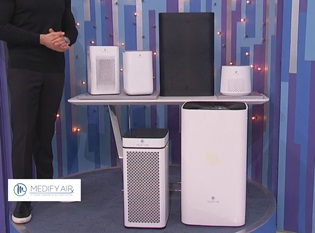
Win a Medify Air Purifier Collection ($1,303 Value)
Breathe easier with this whole-house air purification bundle from Medify Air! This prize features 6 medical-grade air purifiers capable of covering 2,500 square feet in just 30 minutes. Don’t miss your chance to upgrade your home health for free.
Giveaway ends: January 2, 2026 @ 11am EST
ENTER TO WIN