🩷 The Ultimate Guide to Staying Hydrated and Organized in 2026
Discover how to make 2026 your healthiest, most organized year yet. Learn the science behind proper hydration, explore delicious ways to drink more water, and master time management strategies that transform chaos into productivity.
The Science of Hydration and Health
Water comprises approximately 60% of adult body weight and plays essential roles in virtually every physiological process. Proper hydration regulates body temperature through perspiration, lubricates joints to prevent friction and injury, transports nutrients and oxygen to cells, removes waste products through urine and bowel movements, and maintains blood pressure and cardiovascular function. Even mild dehydration—losing just 1-2% of body water—impairs cognitive performance, mood, and physical endurance. Chronic inadequate hydration contributes to kidney stones, urinary tract infections, constipation, and potentially increased risk of certain chronic diseases. Understanding hydration’s fundamental importance motivates consistent water intake as a cornerstone of health maintenance.
Individual hydration needs vary based on multiple factors including body size, activity level, climate, and overall health status. The commonly cited “eight glasses daily” guideline provides a reasonable baseline but oversimplifies individual requirements. The National Academies of Sciences recommends approximately 3.7 liters (125 ounces) daily for men and 2.7 liters (91 ounces) for women from all beverages and foods. About 20% of daily fluid intake typically comes from food, particularly fruits and vegetables with high water content. Physical activity, hot weather, illness with fever, and pregnancy or breastfeeding all increase fluid requirements. Rather than rigidly counting ounces, monitor urine color—pale yellow indicates adequate hydration while dark yellow suggests insufficient intake—and drink when thirsty, before intense physical activity, and regularly throughout the day.
Sparkling water provides identical hydration benefits to still water while offering sensory variety that encourages increased consumption. Some people worry that carbonation might harm bones or teeth, but research shows these concerns are unfounded for plain sparkling water without added sugars or acids. The carbonation in sparkling water comes from carbon dioxide, which creates carbonic acid—a very weak acid that doesn’t significantly affect tooth enamel or calcium absorption. Studies comparing sparkling and still water find no differences in bone density or dental health when beverages contain no sugar or acidic flavorings. The bubbles may even provide benefits: some research suggests carbonation increases feelings of fullness, potentially supporting weight management, and many people find the fizz more satisfying than still water, leading to better hydration compliance.
Making Hydration Delicious with Flavored Sparkling Water
Flavor variety transforms hydration from a health chore into an enjoyable experience that people actually look forward to throughout the day. LaCroix offers dozens of naturally essenced flavors ranging from classic citrus options like lemon and lime to more adventurous combinations like passionfruit and hibiscus. These natural essences—derived from the oils extracted from fruit skins—provide authentic taste without calories, sweeteners, or sodium. This approach allows you to enjoy flavorful beverages without the health consequences of sugary drinks or the potential concerns surrounding artificial sweeteners. The variety prevents flavor fatigue, letting you switch between options based on mood, meal pairings, or simply what sounds refreshing in the moment.
Different flavors suit different occasions and personal preferences, allowing customization of your hydration routine. Citrus flavors like grapefruit, orange, and tangerine provide bright, energizing tastes perfect for morning hydration or post-workout refreshment. Berry flavors including raspberry, blackberry, and strawberry offer sweeter profiles without actual sugar, satisfying cravings for something fruity. Tropical options like coconut, mango, and pineapple transport taste buds to vacation mode, making hydration feel indulgent. More subtle flavors such as cucumber or pure (unflavored) appeal to those preferring minimal taste. Experimenting with different flavors helps identify personal favorites while keeping hydration interesting enough to maintain consistent intake throughout days, weeks, and months.
Creating flavor combinations and serving suggestions elevates sparkling water from simple hydration to beverage craft. Mix different LaCroix flavors to create custom combinations—lime and coconut for a virgin mojito vibe, grapefruit and berry for a sophisticated blend, or lemon and raspberry for a refreshing twist. Add fresh fruit slices, herbs like mint or basil, or cucumber ribbons for visual appeal and subtle flavor enhancement. Serve over ice in attractive glassware rather than drinking from cans to make hydration feel more special and intentional. Use sparkling water as a base for mocktails, replacing sugary mixers in favorite cocktail recipes with flavored varieties. These creative approaches transform routine hydration into enjoyable rituals that support consistent healthy habits.
🩷 The Benefits of Zero-Calorie Beverages
Replacing just one daily sugary beverage with sparkling water eliminates approximately 150 calories and 40 grams of sugar from your diet. Over a year, this single swap could prevent gaining 15 pounds while dramatically reducing sugar intake. Zero-calorie beverages like LaCroix provide taste satisfaction without metabolic consequences, supporting weight management and reducing diabetes risk while maintaining the pleasure of flavorful drinks.
Time Management and Organization Strategies
Effective time management begins with honest assessment of how you currently spend time and identification of priorities that deserve your attention. Track your activities for one week, noting how much time goes to work, family, self-care, leisure, and time-wasting activities. This data reveals patterns—perhaps social media consumes hours you thought were spent productively, or meetings dominate days leaving insufficient focus time. Compare this reality against your stated priorities and values. If family ranks as your top priority but receives minimal quality time, your schedule doesn’t align with your values. This awareness creates motivation and direction for restructuring time allocation to better reflect what truly matters to you.
The Eisenhower Matrix provides a powerful framework for prioritizing tasks based on urgency and importance. Divide activities into four quadrants: urgent and important (crises, deadlines), important but not urgent (planning, relationship building, prevention), urgent but not important (interruptions, some emails), and neither urgent nor important (time wasters, busy work). Focus primarily on important-but-not-urgent activities—these prevent crises, build capabilities, and create long-term value. Urgent-and-important tasks demand immediate attention but shouldn’t dominate your schedule if you’re planning effectively. Delegate or minimize urgent-but-not-important activities, and eliminate neither-urgent-nor-important time wasters. This framework helps distinguish between genuinely important work and mere busyness, directing energy toward activities that actually advance your goals.
Time blocking transforms abstract intentions into concrete action by scheduling specific activities during designated time periods. Rather than maintaining endless to-do lists that create anxiety without ensuring completion, assign tasks to calendar blocks. Allocate morning hours for deep work requiring concentration, schedule meetings in afternoon blocks, and reserve evenings for personal time. Include blocks for email processing rather than constantly checking throughout the day. Schedule breaks, exercise, and meals as non-negotiable appointments with yourself. This approach provides structure that reduces decision fatigue while ensuring important activities actually happen rather than being perpetually postponed. Treat calendar blocks as commitments, protecting them from interruptions just as you would protect meeting times with others.
The Power of Physical Planning Tools
Despite digital calendar ubiquity, physical planning tools offer unique cognitive and practical benefits that screens cannot fully replicate. Writing information by hand activates different brain regions than typing, improving memory encoding and retention. The physical act of writing appointments and tasks creates stronger mental associations than tapping screens. Physical calendars provide constant visual presence on desks, serving as persistent reminders unlike digital calendars hidden behind screens and easily ignored. The tactile satisfaction of crossing off completed tasks or turning calendar pages provides psychological rewards that digital checkboxes lack. For many people, the combination of visual, tactile, and kinesthetic engagement with physical planning tools creates more effective organization than purely digital approaches.
Desk calendars specifically excel at providing comprehensive monthly overviews that facilitate better long-term planning. While phone calendars display limited information at once—typically daily or weekly views requiring scrolling to see broader patterns—desk calendars show entire months at a glance. This bird’s-eye perspective reveals schedule patterns: clusters of commitments suggesting overload, gaps indicating available capacity, and recurring events requiring preparation. Seeing the full month helps identify ideal timing for projects, vacations, or personal commitments by visualizing existing obligations and available space. This comprehensive view supports more strategic decision-making about time allocation than the narrow focus of digital daily views.
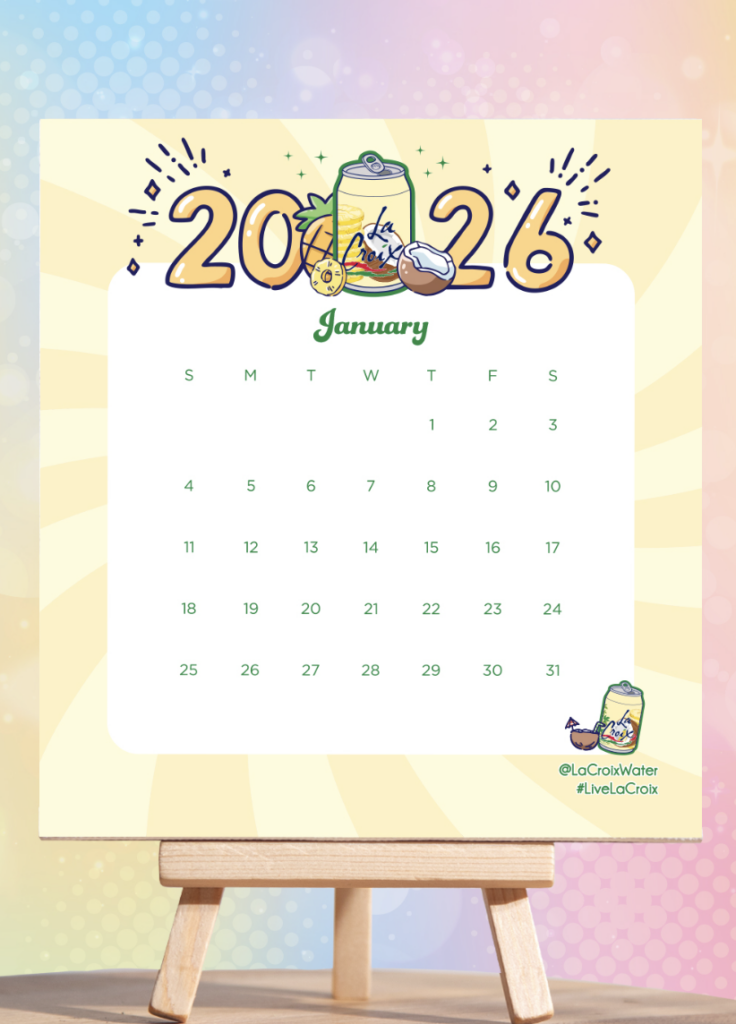
The aesthetic and functional design of quality desk calendars adds value beyond basic scheduling. A beautifully designed calendar featuring appealing imagery, inspiring quotes, or favorite brands transforms a utilitarian tool into decorative art that enhances workspace ambiance. The LaCroix 2026 calendar combines practical monthly grids with brand-themed design celebrating your favorite sparkling water flavors. This dual purpose—functional planning tool and attractive décor—justifies desk space while adding personality to work environments. Unlike generic calendars, branded versions connect daily planning to products and companies you genuinely enjoy, making the planning process itself more pleasant and personally meaningful.
🩷 Hybrid Planning Systems
Many productivity experts recommend hybrid systems combining digital and physical planning tools. Use digital calendars for appointments requiring reminders and coordination with others, while maintaining physical planners for daily task lists, goal tracking, and reflective planning. This approach leverages each format’s strengths: digital for scheduling and sharing, physical for thinking and memory. Experiment to find your optimal balance between screen-based and paper-based planning.
Building Sustainable Healthy Habits
Habit formation follows predictable patterns that, when understood, enable intentional creation of desired behaviors. Research shows that habits form through repetition in consistent contexts—performing the same action in the same situation repeatedly until it becomes automatic. The habit loop consists of cue (trigger), routine (behavior), and reward (benefit). To establish new habits, design clear cues that prompt desired behaviors: place a water bottle on your desk as a visual reminder to drink regularly, or position your calendar prominently where you’ll see it each morning. Ensure immediate rewards: the refreshing taste of sparkling water, the satisfaction of crossing off completed tasks. Consistency matters more than intensity—drinking water throughout every day builds stronger habits than occasional marathon hydration sessions.
Habit stacking leverages existing routines to anchor new behaviors, making adoption easier than creating entirely new patterns. Identify established habits—morning coffee, lunch break, evening wind-down—and attach desired new behaviors to these existing anchors. Drink a glass of sparkling water immediately after your morning coffee. Review your desk calendar while eating lunch. This piggybacking approach reduces the cognitive load of remembering new behaviors by linking them to actions you already perform automatically. The existing habit serves as a reliable cue for the new behavior, increasing consistency and accelerating habit formation.
Tracking progress provides motivation and accountability that sustain habits through challenging periods. Use your desk calendar to mark days you successfully maintain desired habits—drinking adequate water, completing priority tasks, exercising. These visual records create satisfying evidence of consistency while highlighting patterns in successes and lapses. Seeing a chain of marked days motivates continuation to avoid breaking the streak. When lapses occur, tracking reveals triggers—stress, travel, illness—that disrupt routines, allowing proactive planning for similar future situations. Progress tracking transforms abstract intentions into concrete data that guides adjustments and celebrates achievements, making long-term habit maintenance more likely.
Creating Your Best Year in 2026
Annual goal setting provides direction and purpose that daily routines sometimes obscure. Rather than vague resolutions like “be healthier” or “get organized,” set specific, measurable goals: drink 80 ounces of water daily, complete three priority tasks before checking email, exercise four times weekly. Break annual goals into quarterly milestones and monthly action steps. Use your 2026 calendar to schedule specific actions supporting these goals—blocking exercise time, planning meal prep sessions, scheduling quarterly goal reviews. This systematic approach transforms aspirations into actionable plans with built-in accountability through calendar commitments.
Balance across life domains prevents burnout and creates sustainable success. Ensure goals address multiple areas: physical health (hydration, exercise, sleep), professional development (skills, projects, networking), relationships (family time, friendships, community), personal growth (learning, hobbies, reflection), and financial wellness (budgeting, saving, investing). Neglecting any domain eventually undermines overall wellbeing and satisfaction. Use monthly calendar reviews to assess balance—if work dominates while personal relationships receive minimal attention, consciously schedule relationship-building activities. This holistic approach creates well-rounded lives where success in one area doesn’t require sacrificing others.
Regular reflection and adjustment keep goals relevant as circumstances and priorities evolve throughout the year. Schedule monthly reviews to assess progress, celebrate achievements, and identify obstacles requiring problem-solving. Quarterly deep dives evaluate whether goals still align with current values and life situations—perhaps career changes, family developments, or personal insights shift priorities. This flexibility prevents rigid adherence to outdated goals while maintaining general direction. Your 2026 calendar serves as both planning tool and reflection prompt, with each month offering opportunities to course-correct, recommit, or pivot as needed. This adaptive approach creates sustainable progress toward meaningful objectives rather than rigid pursuit of potentially irrelevant targets.
🩷 You Made It! Enter the Sweepstakes Below
🩷 ENTER HERE 🩷🎁 Prize Details
- Prize:
- LaCroix 2026 Desk Calendar
- Number of Winners:
- 300 Winners
- Calendar Features:
- Monthly grid format
- LaCroix-themed design
- Perfect for desk or workspace
- Stay organized all year
📋 Entry Details
- How to Enter:
- 1. Like the Instagram post
- 2. Comment your favorite flavor
- 3. Follow @lacroixwater
- Entry Deadline:
- January 14, 2026
- Winner Notification:
- Via Instagram direct message
- Eligibility:
- Contiguous U.S. residents
- 18+ years old
🏆 Quick Facts
- Sponsor:
- LaCroix Sparkling Water
- Entry Platform:
- Instagram (@lacroixwater)
- Prize Value:
- Exclusive 2026 calendar
- Important Note:
- Not sponsored by Instagram
- Release Instagram of responsibility
- Agree to Instagram terms of use
🩷 300 winners! Enter now for your chance to win a LaCroix 2026 desk calendar!